AI Road-Damage Repair Technology Demonstrated on Jeju Public Roads
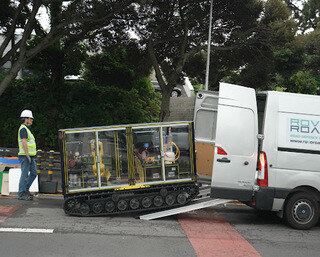
Cheju Halla University and its partners at Seoul National University, KAIST, and Rovoroad carried out the first Jeju field demonstration of their AI-based unmanned road-damage repair technology. The demonstration ran for five days, from June 21 to 25, on public roads in Jeju. It was a first-year joint-research result tested in a real road environment, covering both AI road inspection and unmanned robotic repair.
From AI vision detection to unmanned repair
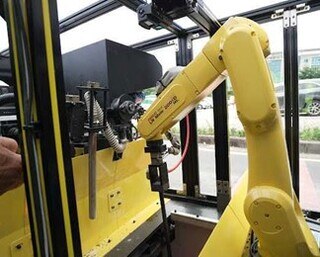
An AI vision system mounted on a vehicle detects potholes and cracks in the road surface in real time. An unmanned repair robot then fills the damaged areas autonomously, demonstrating the full process from inspection to repair. Instead of conventional asphalt mix, the team used a thermoplastic material designed to improve durability and examined its potential to extend road service life.
Officials from Jeju Special Self-Governing Province’s Road Management Division observed the demonstration and assessed its potential for field deployment. The data collected on public roads will support further improvements to inspection accuracy and the reliability of the repair process.
First-year results and the second-year kickoff
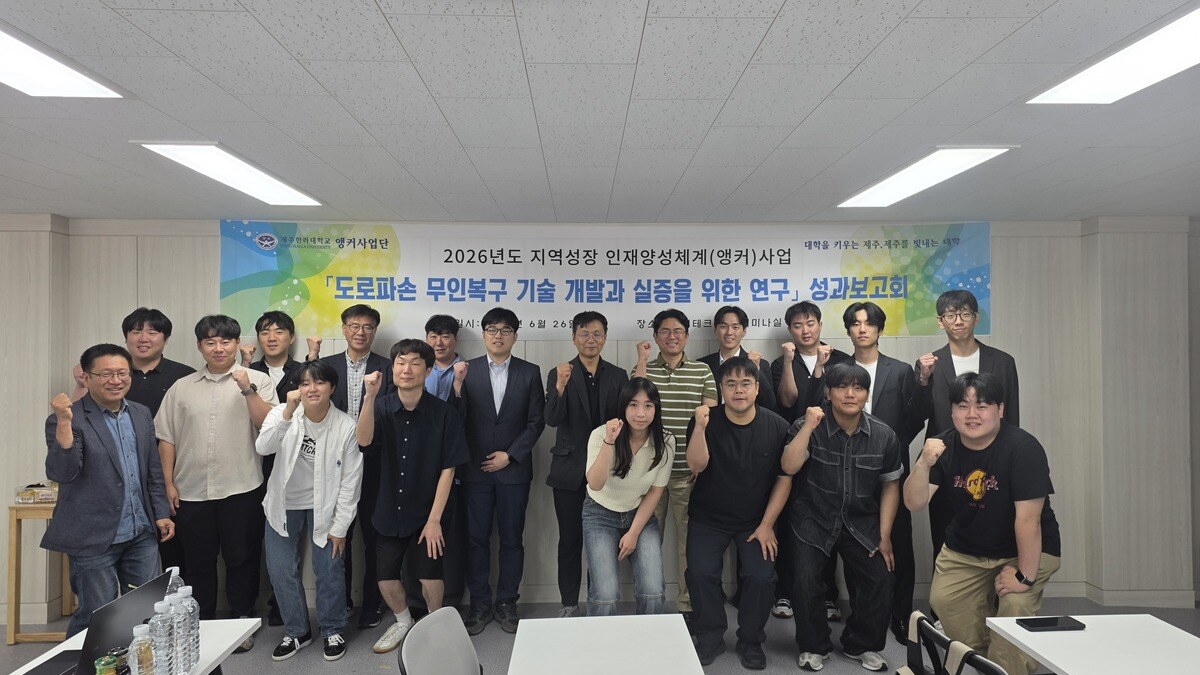
On June 26, the university held a first-year research results briefing and second-year kickoff in the K-Hi-Tech Center seminar room. More than 20 people, including Jeju Special Self-Governing Province officials, Jeju Anchor Project representatives, and participating researchers, reviewed the first-year results, watched footage from the Jeju demonstration, and discussed a technology-upgrade and scale-up roadmap for the second year.
Young Joon Lee, the research lead and a professor at Cheju Halla University, said the long-term goal is to build a data-driven preventive maintenance system rather than simply repair roads after damage occurs. The second year will use field data to improve technical maturity while pursuing both greater public safety and more efficient road management.
AI education connected to regional infrastructure
This research brings together AI vision, robot control, and field data to address a regional infrastructure problem. For AI students and researchers, it offers a concrete case of how AI can support inspection and repair in physical infrastructure, beyond analysis on a screen.
Read more about the research background and technology development in the RISE unmanned road-damage repair project.
Official source
Share